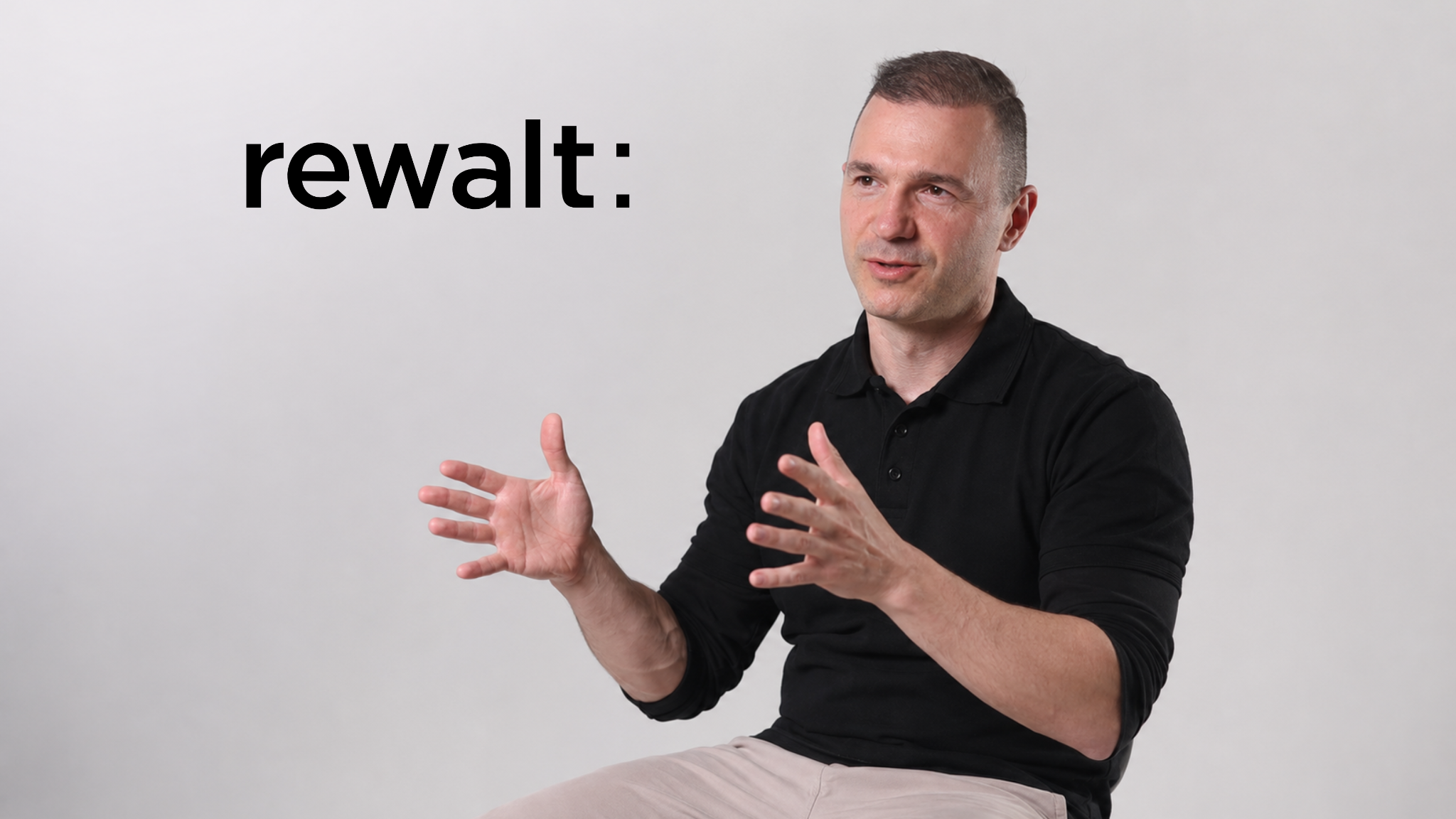
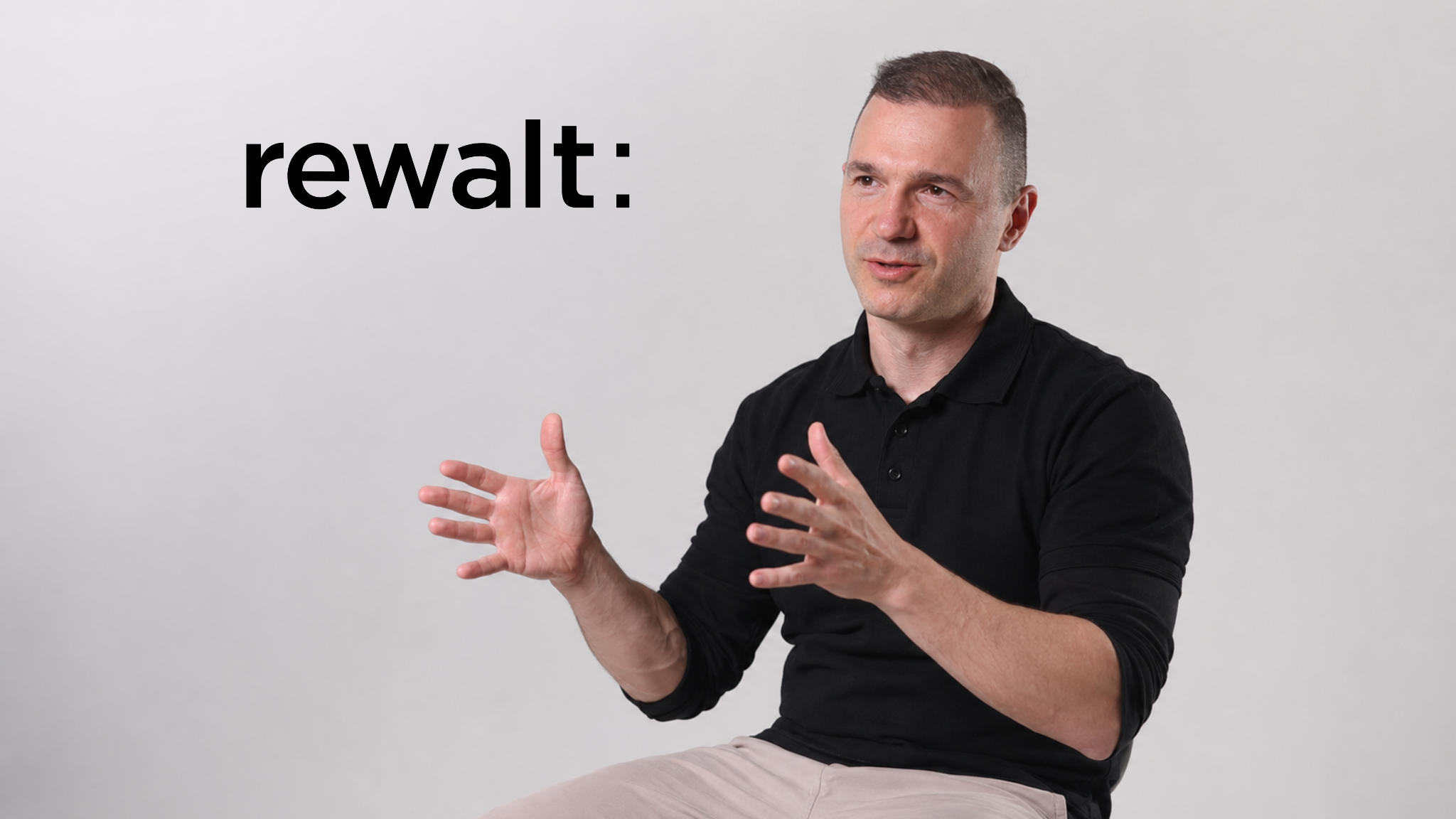
By Mikhail Bobkin, Co-Founder & CEO of rewalt:
Breaking down the silos in modern finance
The contemporary financial landscape remains fragmented by artificial boundaries between services, forcing retail users to juggle disconnected platforms simply to manage their own money.
Rather than introducing another isolated trading tool, the evolution of Rock-West into rewalt: directly targets this systemic friction by creating a continuous pipeline for capital.
“The problem in finance isn’t a lack of products; it’s the walls between them,” explains Mikhail Bobkin, Co-Founder & CEO of rewalt:.
A typical customer earns money in one place, banks it somewhere else, transfers it to a broker to trade, uses another platform for digital assets, and moves it again when they want to spend it. Every institution controls one part of that journey, with its own incentives, fees, and restrictions. Rock-West began by applying a simple principle to trading: treat the customer fairly. rewalt: takes that principle further. We want to build infrastructure that allows capital to move more naturally between trading, holding, converting, transferring, and spending.https://rewalt.com/isn’t a pivot away from Rock-West’s values—it’s what those values make possible.
Why alignment precedes integration
While many institutions attempt to manufacture an “ecosystem” by merely bundling cards, trading terminals, and digital wallets under a single brand login, true synergy requires underlying economic alignment rather than superficial features.
For rewalt:, that foundation relies on eliminating conflicting revenue models between the broker and the client.
“Integration alone doesn’t create an ecosystem,” notes Bobkin.
A broker can add a card. A bank can add trading. An exchange can add payments. But if every product is driven by conflicting incentives, you’ve simply put several businesses behind one login. For us, alignment comes first. Rock-West was built around an A-Book philosophy because we wanted our economics to come from customers choosing to trade with us—not from customers losing to us. That matters when you expand beyond brokerage. If a customer decides not to trade today and instead wants to hold, move, convert, or spend their capital, that shouldn’t be a bad outcome for us. A customer who doesn’t trade today should still be a valuable customer tomorrow.
Designing for the lifecycle of capital
Translating this philosophy into tangible products requires shifting product discovery away from pushing financial instruments toward supporting the real-world utility of money.
While high-performance execution remains the core, rewalt: surrounds it with multi-rail payments, automated social investing, and daily spending utilities.
“We start with a different question,” Bobkin emphasizes.
Instead of asking, ‘What product can we sell this customer?’ we ask, ‘What is this customer trying to do with their capital?’ Trading remains our foundation. Around it, we’re building better funding and payment infrastructure, broader financial functionality, rewalt: copy, and rewalt: cards. The experience we’re working toward is simple: Fund. Trade. Move. Convert. Spend. All in one https://rewalt.com/. Customers shouldn’t have to rebuild their financial identity every time their money changes purpose.
Compliance as invisible architecture
Regulatory compliance, identity verification, and anti-money laundering frameworks are frequently blamed for killing conversion and user experience in retail finance.
However, rewalt: approaches regulatory rigor as a challenge of backend architecture rather than a burden to be shifted onto the trader.
“Regulation isn’t the enemy of customer experience—poor architecture is,” states Bobkin.
KYC, AML, security, suitability, and sanctions controls exist for good reasons. Our responsibility is to handle that complexity intelligently rather than make the customer navigate it. Customers shouldn’t need to understand which entity, payment provider, or regulated partner sits behind every action. Compliance should create safety; it shouldn’t become the product.
The long-term ambition: capital with the speed of information
The ultimate vision for next-generation financial infrastructure is to give money the same frictionless mobility as digital communication, without compromising regulatory safeguards or client fund security.
Extending institutional execution into everyday liquidity is the logical progression of fairness in finance.
“Our ambition is to make the movement of capital feel more like the movement of information,” Bobkin concludes.
Money still lives in silos—banks, brokers, exchanges, wallets, payment processors, and cards. Each has its own rules about how capital gets in and how it gets out. We want to reduce those boundaries without losing the safeguards that financial infrastructure requires. Rock-West started with the idea that customers should be treated fairly when they trade. rewalt: asks the logical next question: Why should that fairness stop when the trade ends? That’s why we’re building rewalt:.
The post Beyond the trade: why rewalt: is building a new model for capital appeared first on Invezz
By Mikhail Bobkin, Co-Founder & CEO of rewalt: Breaking down the silos in modern finance The contemporary financial landscape remains fragmented by artificial boundaries between services, forcing retail users to juggle disconnected platforms simply to manage their own money. Rather than introducing another isolated trading tool, the evolution of Rock-West into rewalt: directly targets this systemic friction by creating a continuous pipeline for capital. “The problem in finance isn’t a lack of products; it’s the walls between them,” explains Mikhail Bobkin, Co-Founder & CEO of rewalt:. Why alignment precedes integration While many institutions attempt to manufacture an “ecosystem” by merely bundling cards, trading terminals, and digital wallets under a single brand login, true synergy requires underlying economic alignment rather than…
Leave a Reply